
The Joy of Padel podcast with Emma Kimber (JOPS01E04)
Emma Kimber is a newspaper-and-magazine-editor-turned-PR-turned-founding editor of The Bandeja Magazine, dedicated to spreading the joy of padel! Like Emma, the team behind The Bandeja love playing padel and believe that padel can – and should – be played by everyone of any age or ability; it’s great to watch the athleticism and skill of elite players but nothing beats time on court with friends, family or fellow club members.
To find out more about Emma Kimber and The Bandeja Magazine:
- The Bandeja Magazine online
- Find or follow on Instagram: The Bandeja Magazine
- Find or follow The Bandeja Magazine channel on YouTube
To listen to the show:
To listen to The Joy of Padel podcast, you can use the embedded player above, or go find it on Spotify, Apple Podcasts or any number of other podcasting services listed here.
Send in your questions or reactions:
Please send me your questions — as an audio file if you’d like — to nminterdial@gmail.com. Otherwise, below, you’ll find the show notes and, of course, you are invited to comment. If you liked the podcast, please take a moment to review and/or rate it! ¡VAMOS!
Further resources for The Joy of Padel:

The Joy of Padel podcast, hosted by Minter Dial, a padel tennis player since 1974, is an exhilarating show that delves into the captivating stories of notable padel personalities worldwide.
Meanwhile, you can find Minter's other podcast, The Minter Dialogue Show (in English and French), in this podcast tab, on Spotify or via Apple Podcasts.
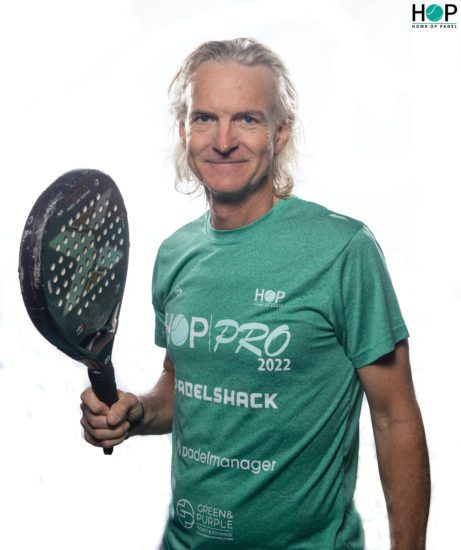
About the host: Minter Dial
Minter Dial is an international professional speaker, author & consultant on Leadership, Branding and Transformation. His involvement in sports has been a lifetime passion. Besides playing 18 years of rugby, captaining athletics teams, coaching tennis and playing squash for his university, he’s been a lifelong player of padel tennis, starting at the age of 10, from the time of its very first public courts at the Marbella Club in 1974.
Then, after a successful international career at L’Oréal, Minter Dial returned to his entrepreneurial roots and has spent the last twelve years helping senior management teams and Boards to adapt to the new exigencies of the digitally enhanced marketplace. He has worked with world-class organisations to help activate their brand strategies, and figure out how best to integrate new technologies, digital tools, devices and platforms. Above all, Minter works to catalyse a change in mindset and dial up transformation. Minter received his BA in Trilingual Literature from Yale University (1987) and gained his MBA at INSEAD, Fontainebleau (1993). He’s author of four award-winning books, including Heartificial Empathy 2nd edition (2023), You Lead (Kogan Page 2021), co-author of Futureproof (Pearson 2017); and author of The Last Ring Home (Myndset Press 2016), a book and documentary film, both of which have won awards and critical acclaim.
It’s easy to inquire about booking Minter Dial here.
View all posts on padel tennis by Minter Dial
Full transcript via Instinct
Transcription courtesy of Instinct
Minter Dial: Hello and welcome, a very warm welcome to the Joy of Padel podcast. Spreading and sharing the supreme delight of this wonderful and fast-growing game. I’m your host, Minter Dial, and this podcast is brought to you by Padel 1969, the largest manufacturer of premium padel courts. One court for life by Padel 1969. So this is the inaugural season of the Joy of Padel podcast. And to start with, we’re going to do an episode once every fortnight. Episodes will drop every other Wednesday at 12:00 noon London time. Please let us know what you think about the show by putting up a rating and review. So for episode number four of the Joy of Padel, our guest is Emma Kimber. Emma is a newspaper and magazine editor turned PR turned magazine founding editor, and in this particular case of the Bandeja, a magazine specifically targeting everyone in padel. Like Emma, the team behind the Bandeja love playing padel and believe that padel can and should be played by everyone of any age or ability. It’s great to watch the athleticism and skill of elite players, but nothing beats time on court with friends, family, and fellow club members, and I fully agree. Emma Kimber, how delightful to have you on the Joy of Padel podcast. In your own words, who’s Emma?
Emma Kimber: Good morning, Minter. Um, who am I? A journalist for first and foremost. Um, something I’ve been doing since I was 18. Um, so I very much consider myself a journalist. Um, my career’s moved around a little bit. Traveled around the world as well with various um things that I’ve been up to. So, um came back to the UK and discovered that padel had taken off and was playing. And um it suddenly occurred to me, my friend and I were talking, um a lovely lady called Katherine Larrard, who I play with at Maldon. Um, we were talking and thinking about things we could do in padel because we were just really enjoying it. And um being a journalist, being an editor, I came up with the idea of launching a magazine because there was no media um for padel in the UK. So, come from a journalism background. I’ve been an editor in newspapers, an editor in magazines. Um, um my mainstay at the moment actually is PR. I’ve got my own PR company. Um, so The Bandeja is a sideline. So, this is why anybody that’s tried to get in contact with me and they’ve sent me an email and maybe didn’t get a reply, it’s because The Bandeja is a little bit of a sideline, but my hope is to turn it into my full-time job at some point, which would be fantastic. So, um so yeah, that’s it.
Minter Dial: Beautiful. Well, The Bandeja, The Bandeja, as we would say in Spanish. You are into how many editions? How many episodes? Or how how how how’s it going? Tell us
Emma Kimber: It’s going absolutely brilliantly. Um, only two issues to point to the point we’re at now. I’m working on issue number three. Um, we are hoping to have that out at the end of August, the beginning of September because we’re breaking a super interesting story, um, working with one of the racket manufacturers on a brilliant, brilliant, brilliant piece. Um, so that’s we’re going to the idea is that we come out at the point which they’re launching their new product and it is so exciting. So, um, so yes, uh, it’s three issues, but we’ve also got the website which has been a huge focus for the last few months or so. Um, that’s up and running, so that’s thebandeja.com. Um, really active on LinkedIn, which is the B2B side of the business as well. Um, and then Instagram as well. We have quite a few bits on Instagram and we try and keep in touch with people there. Um, and Facebook as well. So I mean social media, it’s so time consuming, isn’t it? But you have to do it and it’s great interacting with people.
Minter Dial: It feels for sure that uh padel is an Instagram site. Uh that’s my my flow my my uh page is just swarmed by beautiful uh padel highlights. So Emma, you you came back to the UK, got this idea of doing the this this magazine, but I’m guessing you got an uh whiff of padel somewhere else. What was your route into padel?
Emma Kimber: So, well, do you know what? Funnily enough, no, it wasn’t pretty much until I came back to the UK. So I’d been um in Dubai for a few years and had been playing tennis over there. Anybody that knows Dubai um will know Barasti um and I played tennis generally on the roof of Barasti, which on an evening was absolutely beautiful. Um you’ve got all the the the tower blocks around you with their twinkly lights and stuff. So that was gorgeous with a nice group of people over there. Um and there really was no mention of padel. We’re going back um latest 2018 and I know it was played over there, but generally nobody really talked about it. Um and I came back and one of my girlfriends um had come back from Dubai and was back in Essex um and picked it up I think at Prested Hall and she was saying to me, Emma, you should try padel. It’s absolutely fantastic. And I was thinking, what on earth is she talking about? And not a clue. Um so she kept saying, play, play, play. And luckily enough um we moved back and very close to Padel United at Maldon. So the opportunity was there. Jumped on court with um another of my friends that I encouraged Catherine that I encouraged to play as well and it just went from there. Um loved it. Came from played tennis since uh 40 years, I guess. Um not brilliant tennis, just club tennis. I’ve had a few successes along the way, but um just really, really love tennis. So it seemed a natural progression to try another racket sport. Tried badminton, didn’t really get enthused about it. It’s a great sport, but wasn’t really for me. Squash I’ve toyed with as well, but again um nothing quite touched the sides as much as tennis. So tried padel and absolutely loved it because I like to hit the ball quite hard and I get very excited. So to be on a padel court where you can really whack a ball without trying to score a point just even just warming up you can hit hard and if it just hits the wall just for a couple of minutes at the start of the game, it’s okay. Um and it you don’t have to chase after it. It just stays in court. So you can get very excited and yeah, my my poor coach Kai who first introduced me to it, I think, you know, just gave me five minutes just to be daft um when we first started having our lessons. Um so yes, that was my route into padel. Just really loved it. Um met some super lovely people. It’s yeah, it’s and I think because everybody’s learning it at the moment, people are coming in so many people coming into it new that you you know, there’s so many people at the same level. Um it’s now a good two and a bit years and you can see the sport maturing. You can see people within clubs that have started out that are so much better um even going up, you know, grade one level within quite a short space of time. So that’s been interesting as well and I’ve really enjoyed seeing people progress. Um I’m not one of them and I’m quite happy with that and the whole, you know, my mantra is that padel is for everybody um and whether you’re, you know, you’re at the beginning of your journey or you’re doing super well, um it doesn’t matter. It is absolutely for everybody to enjoy.
Minter Dial: Well, we agree with that and and the fact is that The Bandeja magazine of course is very clearly for the UK and for everybody whether it’s pros or beginners or amateurs like me. So Emma, I’m I’m going to guess what you must some kind of strong animal. What kind of animal would you say you are in terms of the way you play to describe the Emma the padel player?
Emma Kimber: This is a super difficult question. Um, I think I’m a range of animals depending on what mood I’m in, what day it is. I think, um, the first five to 10 minutes, um, we’ve got a, a puppy sprocker, um, and he just runs everywhere like a lunatic. So I think for the first five to 10 minutes on court, given my way, I am a dog. So just a mad spaniel racing around, ears flapping everywhere, um, just having a lot of fun. Um, again, if it’s a match and I need to be serious, I guess, I don’t know, quite calculated. So something that’s quite calculated, but I’m, I’m not, yeah, I don’t know. Animals, I don’t like comparing myself to an animal. I find this question super tough and I was thinking about it, what would I be? Um, would I be a chimpanzee? Yes, quite possibly. Um, sometimes a bit of a cat, I think, if I’m feeling a little bit more flexible, you know, you can really bend your knees and you’re really feeling, feeling it. Um, so I think depending on the day, um, a range of animals. There have been times actually I played at Maldon and I felt like a fish because we’re right on the coast and the wind was blowing and now the water was coming in as well and although it’s got covers on, it was sort of managing to get through. So we were just getting a little bit wet while we were playing as well. So
Minter Dial: Well, fortunately, it wasn’t a fish out of water. How about what is your favorite shot, Emma? What’s your favorite shot?
Emma Kimber: That’s super easy, my forehand. Um, I’ve got a nice forehand from tennis. Um, I’m so understand. Um, and using it in padel, it’s a tennis shot and it shouldn’t be, um, you know, you run in tennis you run into the into the shot with your arm ready to go. Um, and I’m trying to not do that in padel. I’m thinking about that tennis ball that’s sitting underneath my, um, my my sort of my arm to keep my arm close to my side. Um, but yeah, I’d a nice forehand. I very much enjoy hitting that.
Minter Dial: That sounds like something Kai is telling you to keep the tennis ball underneath your your elbows stay close to your side. Is that correct? Just keep your arms in. Yeah, very good, very good advice. And what about a shot that you’d like to improve?
Emma Kimber: This is a difficult one and I think it’s going to take me a while to master it but you see the pros playing a really really strong backhand. I think we were discussing this earlier I think you suggested it might just be a block but it’s a very strong shot. You’re not putting a lot of power into it you’re using the power that’s coming from the ball so you are just blocking it and sending it back so that it’s nice and low and it doesn’t bounce up at the other side and when it’s played when you watch them play it and they make it look so easy and I try and do it with my arms and it’s just a tough shot for me personally anyway.
Minter Dial: Yeah, so you’re talking about the shot that comes off what you call the bajada where basically ball lob bounces off the back wall, it sticks high and then they’re powering at you who’ve now run up to the net to take over the net and then you’re just trying to block that shot as fast as it comes, get it back over the net and hopefully with that right length so it doesn’t come running back off the back wall again at you.
Emma Kimber: And I said getting the length is so important and that’s again something that Kai was really keen on on teaching that you have to you know make sure that and coming you know a tennis court’s obviously huge so that’s not a problem but it just it can be difficult in padel to to get the length without hitting the wall. Um so it’s a very fine line I find to getting it to getting it right but yeah when you watch them play that shot and also on the forehand as well they play it really high up it’s almost a bandeja. I don’t pronounce the bandeja correctly and I’m sort of doing it on purpose and I’d like to do a little series on on how you say it but I I want it to be accessible to people so to everybody that doesn’t have a great command of Spanish um I think we just I’m going to keep it simple um so yeah so I love that shot as well I think it’s a beautiful shot.
Minter Dial: Well, and the reason why I I add the J in there and how the Spanish pronounce it, it’s going to be easier to find it when you type it in because with a J, not a K. That was my that was why I I say that. And um so you watch, I can gather, a fair amount of pro uh padel, World Padel Tour, I’m guessing, and the FIP. Who is your favorite player?
Emma Kimber: Um, that’s a really difficult question, um, because they all have their strengths and they’re all they’re all different to watch, aren’t they? But I think, do you know what, just to bring it home, um, I’d say Tia, Tia Norton, um, because I think she’s amazing on court, absolutely brilliant on court, and she’s a fantastic advocate for the game. She’s um, I mean she’s always been very, very, very keen to deal with us, to speak to The Bandeja, um, and to be helpful and to be open. Um, at the FIP Rise last year in London, she was really happy to sign a tennis ball I’d I’d I’d got um, one of my kids with me, um, and he’s learning to play padel and she very kindly signed a ball, as did Carla Fito, um, and the Dutch guys that won as well. So, um, I think Tia’s got so much going for her and I think her future is immensely bright, particularly after the PPL win.
Minter Dial: With that, with the Las Vegas Smash.
Emma Kimber: How cool was that? It was immense to watch, absolutely fantastic. But yeah, I think she’s got the padel world at her feet and it’ll be interesting to see where she goes from here. So yeah, I’d say Tia because I think she’s a great player and she’s an amazing advocate and ambassador.
Minter Dial: And I’ve had the privilege and pleasure to play alongside her and against her. So I I know I know her game. I know how good she is. Um lovely. So this is the joy of padel and one of the things we want to do is spread the joy. How about a funny the funniest moment you can think of uh for you about padel?
Emma Kimber: Oh gosh, this is really difficult because I spend so much of my time on court just having a really fun time. Um so I’ve been racking my brains and it sounds really boring, doesn’t it? Because I don’t have a standout moment and I think oh gosh, that was really cool. But I think to go back to the early days of first learning um and being on court, it was sunny. That was before Maldon put the covers over the top, so it felt very open and it was great weather. The music was playing and it was just beautiful. Um and then I’d start playing and Kai would be coaching me and I’d just be whacking the balls all over and he’d be like, no, you don’t do it like this. And I’d be like, just Kai, give me 10 minutes, just give me 10 minutes just to get this the excitement out of just stepping on court. Um and it’s sorry, that’s a feeble and a bit of a lame answer, but um I’d I’d I mean, I love my my friend Katherine Larrard. I I love playing with her and we’ve we’ve had a huge number of giggles on court, but they’re sort of um I guess girl related, I guess. You know, we’re sort of laughing about our aches and pains and um a silly shot that we’ve played and we could have done that better and then we’re both going to each other, no, you’re playing beautifully, it’s brilliant, you’re really great, you’re fantastic and all stuff like that. So yeah, it’s just the joy of padel completely and utterly sums it up because it’s such a spirit lifter. Um but I do apologize to find one moment that stand out funny. I’m really it’s just all great.
Minter Dial: Don’t don’t stress or sweat it. I loved the way you spoke about it. It gave me that little sort of rush in my brain just listening to you talk about it with such alacrity and such joy. So that’s beautiful, Emma. Um what about uh I I I think of sports as such a great way to broker life, think about life. Padel tennis is a particular sport. What do you what sort of life lesson has your interaction with padel brought you?
Emma Kimber: I think the biggest thing is you just have to keep trying. Um nothing comes easily. Um and I know there are there are there are people that pick up a racket and they’re just immense. They’re just great at it straight off and they’re just very lucky and very very talented sports people. But I think for the majority of us we just have to work very very hard at it. And it’s the same with everything isn’t it? If you want to be good you just have to keep practicing and practicing and practicing. So it sort of goes back almost to the stuff that you’re taught when you’re little and it’s just you know keep doing it because you will get there. And I was I was talking about my little man who I took to FIP Rise um and we were talking about he’s been taught that it’s not practice makes perfect, it’s practice makes progress. Um and I think that is it’s so um relevant to padel because we’re all coming to it new and we’re bringing various skills. Lots of people are bringing different skills from different racket sports and they’re all slightly different. Some of them fit, some of them don’t. So you’ve just got to keep practicing and you’ve got to keep at it and you will get there. You will make progress. But there’ll be times where it’s the age old thing isn’t it? You you make progress, you hit a plateau, maybe go backwards a little bit and then you start moving up and then your your plateau is a little bit higher the next time. So I think that would be my major life lesson. Um and just talk to people as well. Um I’m fairly shy so I do struggle. Um sometimes I have to steel myself to go and talk to people. Um but I was at Rocket Padel a couple of months ago for their opening. It’s a beauty. Have you been? No. You should go. It’s just amazing. It’s a beautiful beautiful location. Um and it just would be quite easy just to sit and watch people playing but I have to sort of steel myself to go and talk to people. And I I got speaking to a number of people there that had super interesting stories to tell um that were opening padel facilities. There was an amazing influence there that I got speaking with. Um so it’s it’s reminded me that I’ve just got to be brave.
Minter Dial: brave as well. Nice. We we we do talk about being brave on the padel court as well when you got to go for the shot even though there’s a risk you might miss it. So a lovely set of lessons learned. Practice makes progress. Uh be brave, go out and talk to people. The funny thing of course, first of all, A, you’ve been talking great on this podcast, so brava for that. And padel is a game where one does permit to talk on court while playing, you know, as opposed to sort of the shh on a on a golf course. And you mentioned your your experience with music. There is a whole vein of of games which are allowing much more uh a fun experience, a musical, a louder experience than the shh watch and stay silent. Hey Emma, great stuff. What about last words on what is the future of padel in the UK according to Emma Kimber?
Emma Kimber: I think it’s hugely bright. Um, it’s it’s super exciting because it it it has such a low entry point and I think I get a little bit frustrated when people say it’s easy to play and I think that does a disservice to all the thousands of people that are playing it because it’s not easy to play. Um, for people that aren’t necessarily naturally, um, I would say gifted, I don’t mean gifted but that aren’t naturally given to wanting to pick up a racket, um, to get them onto court with a padel racket can be a little bit difficult but there’s something so childlike about it just hitting a ball is really joyful. Um, and so therefore I think if it we can as long as it doesn’t go elitist and I I hope it doesn’t and people can pay to play and just turn up to pay to play and there’s very much an open vibe to um padel facilities and we need more padel facilities but they are coming. I mean the growth has been huge. A year ago I could have I was talking to somebody about this because people keep saying how many padel courts by the end of the year. At the moment I couldn’t tell you. Um, the number 400 is being bandied about. I need to do a tally for the when we come out in the next mag. Um, we’re going to round it up hopefully. Um, but I could have spoken maybe to half a dozen people or so last year and found you know had a fairly reasonable idea of where we were going, how many courts we got, what’s opening, um, what the time scales were. Now I would have to I don’t know how many people I need to talk to now to get an idea of that because it’s just exploded. There are new operators coming in. Um, we’ve got a whole really interesting raft of quite young people opening up padel facilities as well which is really interesting. Um, so it’s super bright, really bright and I hope that it gets pushed all the way down to people that have got no clue about it so that at least everybody has the opportunities at least maybe once to step on court and see if they like it because I think any kind of sport is so so positive. It’s great for your mental health, it’s great for your physical health, it’s great for meeting people, for making friends, um, for forming relationships, everything. Sport has the answer for so much of the stuff that we have to contend with and if padel can can be part of the answer, then that is amazing.
Minter Dial: Well, I fully support everything you said. When one says padel is easier or is easy, I think it’s generally that it’s easier than other sports like tennis or badminton, where the padel is right in your hand, the ball is big, the net is near, as opposed to a tennis racket where it’s two meters away when you’re striking the ball, and that hand-eye is so much more difficult. And if the history of padel has anything to do with it, it’s bound to stay a rather accessible sport. Certainly if you look at how it was played everywhere on every street corner in Argentina as I grew up, and now it’s prevalent in so many different clubs, not just all-white type of clubs in Spain, Italy, and elsewhere. So may the future be bright. Emma, thank you so much for coming on The Joy of Padel. Remind us how we can find out more about The Bandeja.
Emma Kimber: Okay, I also want to say thank you to you Minter, um because you have been an amazing support to me through my journey setting up The Bandeja and getting it off the ground. So thank you for that. I very much appreciated it. Um yes, we have a website. It’s www.thebandeja.com um and the magazines are on there also. There’s another issue coming out. There’s a subscribe button at the top of the page so you can share your details and then you’ll get um notified when the mag is out. But we also run great competitions. We’ve got loads of padel news, um coaching tips from with Mauri Andrini from Hello Padel, which is fantastic. So yeah, the website’s got lots on it. Um it’s really well populated. Um we keep it up to date with stuff. So have a look. Yeah, dive in and just dig around.
Minter Dial: I encourage so, Emma. Many thanks. Vamos. Thank you. So, I hope you’ve enjoyed this Joy of Padel episode. Please don’t forget to subscribe to be the first in queue for the next episode. And if you like what you hear, please do share around with other padel aficionados. This is a sport that deserves to be played by absolutely everyone. And if you got a story that you’d like to share, please send me an email or a better yet, a voice note at nminterdial@gmail.com. With that, thanks for listening and see you on the next episode of The Joy of Padel podcast.