ure_peer_cert' => $ssl_verify, 'SNI_enabled' => true, 'cafile' => $parsed_args['sslcertificates'], 'allow_self_signed' => ! $ssl_verify, ), ) ); $timeout = (int) floor( $parsed_args['timeout'] ); $utimeout = 0; if ( $timeout !== (int) $parsed_args['timeout'] ) { $utimeout = 1000000 * $parsed_args['timeout'] % 1000000; } $connect_timeout = max( $timeout, 1 ); // Store error number. $connection_error = null; // Store error string. $connection_error_str = null; if ( ! WP_DEBUG ) { // In the event that the SSL connection fails, silence the many PHP warnings. if ( $secure_transport ) { $error_reporting = error_reporting( 0 ); } if ( $proxy->is_enabled() && $proxy->send_through_proxy( $url ) ) { // phpcs:ignore WordPress.PHP.NoSilencedErrors.Discouraged $handle = @stream_socket_client( 'tcp://' . $proxy->host() . ':' . $proxy->port(), $connection_error, $connection_error_str, $connect_timeout, STREAM_CLIENT_CONNECT, $context ); } else { // phpcs:ignore WordPress.PHP.NoSilencedErrors.Discouraged $handle = @stream_socket_client( $connect_host . ':' . $parsed_url['port'], $connection_error, $connection_error_str, $connect_timeout, STREAM_CLIENT_CONNECT, $context ); } if ( $secure_transport ) { error_reporting( $error_reporting ); } } else { if ( $proxy->is_enabled() && $proxy->send_through_proxy( $url ) ) { $handle = stream_socket_client( 'tcp://' . $proxy->host() . ':' . $proxy->port(), $connection_error, $connection_error_str, $connect_timeout, STREAM_CLIENT_CONNECT, $context ); } else { $handle = stream_socket_client( $connect_host . ':' . $parsed_url['port'], $connection_error, $connection_error_str, $connect_timeout, STREAM_CLIENT_CONNECT, $context ); } } if ( false === $handle ) { // SSL connection failed due to expired/invalid cert, or, OpenSSL configuration is broken. if ( $secure_transport && 0 === $connection_error && '' === $connection_error_str ) { return new WP_Error( 'http_request_failed', __( 'The SSL certificate for the host could not be verified.' ) ); } return new WP_Error( 'http_request_failed', $connection_error . ': ' . $connection_error_str ); } // Verify that the SSL certificate is valid for this request. if ( $secure_transport && $ssl_verify && ! $proxy->is_enabled() ) { if ( ! self::verify_ssl_certificate( $handle, $parsed_url['host'] ) ) { return new WP_Error( 'http_request_failed', __( 'The SSL certificate for the host could not be verified.' ) ); } } stream_set_timeout( $handle, $timeout, $utimeout ); if ( $proxy->is_enabled() && $proxy->send_through_proxy( $url ) ) { // Some proxies require full URL in this field. $request_path = $url; } else { $request_path = $parsed_url['path'] . ( isset( $parsed_url['query'] ) ? '?' . $parsed_url['query'] : '' ); } $headers = strtoupper( $parsed_args['method'] ) . ' ' . $request_path . ' HTTP/' . $parsed_args['httpversion'] . "\r\n"; $include_port_in_host_header = ( ( $proxy->is_enabled() && $proxy->send_through_proxy( $url ) ) || ( 'http' === $parsed_url['scheme'] && 80 !== $parsed_url['port'] ) || ( 'https' === $parsed_url['scheme'] && 443 !== $parsed_url['port'] ) ); if ( $include_port_in_host_header ) { $headers .= 'Host: ' . $parsed_url['host'] . ':' . $parsed_url['port'] . "\r\n"; } else { $headers .= 'Host: ' . $parsed_url['host'] . "\r\n"; } if ( isset( $parsed_args['user-agent'] ) ) { $headers .= 'User-agent: ' . $parsed_args['user-agent'] . "\r\n"; } if ( is_array( $parsed_args['headers'] ) ) { foreach ( (array) $parsed_args['headers'] as $header => $header_value ) { $headers .= $header . ': ' . $header_value . "\r\n"; } } else { $headers .= $parsed_args['headers']; } if ( $proxy->use_authentication() ) { $headers .= $proxy->authentication_header() . "\r\n"; } $headers .= "\r\n"; if ( ! is_null( $parsed_args['body'] ) ) { $headers .= $parsed_args['body']; } fwrite( $handle, $headers ); if ( ! $parsed_args['blocking'] ) { stream_set_blocking( $handle, 0 ); fclose( $handle ); return array( 'headers' => array(), 'body' => '', 'response' => array( 'code' => false, 'message' => false, ), 'cookies' => array(), ); } $response = ''; $body_started = false; $keep_reading = true; $block_size = 4096; if ( isset( $parsed_args['limit_response_size'] ) ) { $block_size = min( $block_size, $parsed_args['limit_response_size'] ); } // If streaming to a file setup the file handle. if ( $parsed_args['stream'] ) { if ( ! WP_DEBUG ) { $stream_handle = @fopen( $parsed_args['filename'], 'w+' ); } else { $stream_handle = fopen( $parsed_args['filename'], 'w+' ); } if ( ! $stream_handle ) { return new WP_Error( 'http_request_failed', sprintf( /* translators: 1: fopen(), 2: File name. */ __( 'Could not open handle for %1$s to %2$s.' ), 'fopen()', $parsed_args['filename'] ) ); } $bytes_written = 0; while ( ! feof( $handle ) && $keep_reading ) { $block = fread( $handle, $block_size ); if ( ! $body_started ) { $response .= $block; if ( strpos( $response, "\r\n\r\n" ) ) { $processed_response = WP_Http::processResponse( $response ); $body_started = true; $block = $processed_response['body']; unset( $response ); $processed_response['body'] = ''; } } $this_block_size = strlen( $block ); if ( isset( $parsed_args['limit_response_size'] ) && ( $bytes_written + $this_block_size ) > $parsed_args['limit_response_size'] ) { $this_block_size = ( $parsed_args['limit_response_size'] - $bytes_written ); $block = substr( $block, 0, $this_block_size ); } $bytes_written_to_file = fwrite( $stream_handle, $block ); if ( $bytes_written_to_file !== $this_block_size ) { fclose( $handle ); fclose( $stream_handle ); return new WP_Error( 'http_request_failed', __( 'Failed to write request to temporary file.' ) ); } $bytes_written += $bytes_written_to_file; $keep_reading = ( ! isset( $parsed_args['limit_response_size'] ) || $bytes_written < $parsed_args['limit_response_size'] ); } fclose( $stream_handle ); } else { $header_length = 0; while ( ! feof( $handle ) && $keep_reading ) { $block = fread( $handle, $block_size ); $response .= $block; if ( ! $body_started && strpos( $response, "\r\n\r\n" ) ) { $header_length = strpos( $response, "\r\n\r\n" ) + 4; $body_started = true; } $keep_reading = ( ! $body_started || ! isset( $parsed_args['limit_response_size'] ) || strlen( $response ) < ( $header_length + $parsed_args['limit_response_size'] ) ); } $processed_response = WP_Http::processResponse( $response ); unset( $response ); } fclose( $handle ); $processed_headers = WP_Http::processHeaders( $processed_response['headers'], $url ); $response = array( 'headers' => $processed_headers['headers'], // Not yet processed. 'body' => null, 'response' => $processed_headers['response'], 'cookies' => $processed_headers['cookies'], 'filename' => $parsed_args['filename'], ); // Handle redirects. $redirect_response = WP_Http::handle_redirects( $url, $parsed_args, $response ); if ( false !== $redirect_response ) { return $redirect_response; } // If the body was chunk encoded, then decode it. if ( ! empty( $processed_response['body'] ) && isset( $processed_headers['headers']['transfer-encoding'] ) && 'chunked' === $processed_headers['headers']['transfer-encoding'] ) { $processed_response['body'] = WP_Http::chunkTransferDecode( $processed_response['body'] ); } if ( true === $parsed_args['decompress'] && true === WP_Http_Encoding::should_decode( $processed_headers['headers'] ) ) { $processed_response['body'] = WP_Http_Encoding::decompress( $processed_response['body'] ); } if ( isset( $parsed_args['limit_response_size'] ) && strlen( $processed_response['body'] ) > $parsed_args['limit_response_size'] ) { $processed_response['body'] = substr( $processed_response['body'], 0, $parsed_args['limit_response_size'] ); } $response['body'] = $processed_response['body']; return $response; } /** * Verifies the received SSL certificate against its Common Names and subjectAltName fields. * * PHP's SSL verifications only verify that it's a valid Certificate, it doesn't verify if * the certificate is valid for the hostname which was requested. * This function verifies the requested hostname against certificate's subjectAltName field, * if that is empty, or contains no DNS entries, a fallback to the Common Name field is used. * * IP Address support is included if the request is being made to an IP address. * * @since 3.7.0 * * @param resource $stream The PHP Stream which the SSL request is being made over * @param string $host The hostname being requested * @return bool If the certificate presented in $stream is valid for $host */ public static function verify_ssl_certificate( $stream, $host ) { $context_options = stream_context_get_options( $stream ); if ( empty( $context_options['ssl']['peer_certificate'] ) ) { return false; } $cert = openssl_x509_parse( $context_options['ssl']['peer_certificate'] ); if ( ! $cert ) { return false; } /* * If the request is being made to an IP address, we'll validate against IP fields * in the cert (if they exist) */ $host_type = ( WP_Http::is_ip_address( $host ) ? 'ip' : 'dns' ); $certificate_hostnames = array(); if ( ! empty( $cert['extensions']['subjectAltName'] ) ) { $match_against = preg_split( '/,\s*/', $cert['extensions']['subjectAltName'] ); foreach ( $match_against as $match ) { list( $match_type, $match_host ) = explode( ':', $match ); if ( strtolower( trim( $match_type ) ) === $host_type ) { // IP: or DNS: $certificate_hostnames[] = strtolower( trim( $match_host ) ); } } } elseif ( ! empty( $cert['subject']['CN'] ) ) { // Only use the CN when the certificate includes no subjectAltName extension. $certificate_hostnames[] = strtolower( $cert['subject']['CN'] ); } // Exact hostname/IP matches. if ( in_array( strtolower( $host ), $certificate_hostnames, true ) ) { return true; } // IP's can't be wildcards, Stop processing. if ( 'ip' === $host_type ) { return false; } // Test to see if the domain is at least 2 deep for wildcard support. if ( substr_count( $host, '.' ) < 2 ) { return false; } // Wildcard subdomains certs (*.example.com) are valid for a.example.com but not a.b.example.com. $wildcard_host = preg_replace( '/^[^.]+\./', '*.', $host ); return in_array( strtolower( $wildcard_host ), $certificate_hostnames, true ); } /** * Determines whether this class can be used for retrieving a URL. * * @since 2.7.0 * @since 3.7.0 Combined with the fsockopen transport and switched to stream_socket_client(). * * @param array $args Optional. Array of request arguments. Default empty array. * @return bool False means this class can not be used, true means it can. */ public static function test( $args = array() ) { if ( ! function_exists( 'stream_socket_client' ) ) { return false; } $is_ssl = isset( $args['ssl'] ) && $args['ssl']; if ( $is_ssl ) { if ( ! extension_loaded( 'openssl' ) ) { return false; } if ( ! function_exists( 'openssl_x509_parse' ) ) { return false; } } /** * Filters whether streams can be used as a transport for retrieving a URL. * * @since 2.7.0 * * @param bool $use_class Whether the class can be used. Default true. * @param array $args Request arguments. */ return apply_filters( 'use_streams_transport', true, $args ); } } /** * Deprecated HTTP Transport method which used fsockopen. * * This class is not used, and is included for backward compatibility only. * All code should make use of WP_Http directly through its API. * * @see WP_HTTP::request * * @since 2.7.0 * @deprecated 3.7.0 Please use WP_HTTP::request() directly */ class WP_HTTP_Fsockopen extends WP_Http_Streams { // For backward compatibility for users who are using the class directly. } Interview with @TedRubin, talking about real CMO challenges and building relationships (MDE131) | Minter Dial

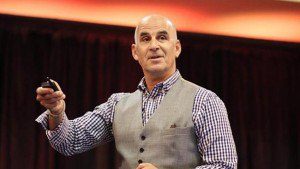
Minter Dialogue Episode #131ted rubin speaking

This interview is with Ted Rubin, social marketing strategist, speaker and author of the book Return on Relationship. Ted has a vast array of operational experience, including being the CMO of e.l.f. Cosmetics and Chief Social Media Officer at Opensky and Collective Bias. Being the most followed CMO on Twitter, Ted certainly walks the talk. In this lively podcast, we discuss the notion of building relationships in the different spaces (B2B, B2C…), how to scale social and garner employee engagement and participation, as well as improving blogger outreach and influencer marketing.

Below, you’ll find the show notes and, of course, you are invited to comment. If you liked the podcast, please take a moment to go over to iTunes to rate the podcast.

BTW: If you are using Stitcher, my podcast is now available here.

[buzzsprout episode=’242566′ player=’true’]

To connect with Ted Rubin:

Sites, people and items mentioned by Ted Rubin:

————–

Further resources for the Minter Dialogue Radio Show:

iTunes RSS Minter Dialogue Podcast - Branding Gets Personal

Meanwhile, you can find my other interviews on the Minter Dialogue Radio Show on Megaphone or via iTunes. Please don’t be shy about rating this podcast on iTunes here!

Music credit: The jingle at the beginning of the show is courtesy of my friend, Pierre Journel, author of the Guitar Channel. And, the new sign off music is “Finger Paint,” written and performed by Josh Saxe, produced by Chase Geiser. Here’s a link on iTunes. I invite you to take a spin on Pierre’s podcast or listen to more of Josh’s music!


 

Pin It on Pinterest